Free Risk Assessment Guide





What Are The Different Types of Fire Extinguishers and Their Uses?
Choosing the right fire extinguisher for your business is essential for protecting your people and property. While fire extinguishers may look similar at first glance, each type is designed for specific fire risks. Using the wrong extinguisher can be ineffective and, in some cases, dangerous.
For businesses, landlords, and duty holders, understanding the different types of fire extinguishers and their uses is an important part of managing fire safety. The right extinguisher provision should be based on the risks within your building, the type of work being carried out, the layout of your premises, and the findings of your fire risk assessment.
In this blog, we’ll explain the main UK fire extinguisher types, what each one is used for, the fire classes they cover, and we share the key considerations to keep in mind when choosing the right extinguishers for your premises.
How many different types of fire extinguishers are there?
There are five main types of fire extinguishers commonly used in UK commercial premises, and these include:
| Fire extinguisher type | Label colour | Common use |
| Water | Red | Solid materials such as paper, wood, and textiles |
| Foam | Cream | Solid materials and flammable liquids |
| CO2 | Black | Electrical equipment and flammable liquids |
| Dry powder | Blue | Mixed fire risks, including flammable gases |
| Wet chemical | Yellow | Cooking oils and fats |
You may also see other extinguisher types or variants, such as water mist, water spray, and specialist dry powder extinguishers. These are usually grouped under the main extinguisher categories but may be recommended for specific environments or higher risk applications.
What are the different fire classes in the UK?
When it comes to choosing a fire extinguisher, it’s important to understand the different fire classes as these describe the type of material or fuel involved in a fire.
The different fire classes in the UK include:
| Fire class | Fire type | Common examples |
| Class A | Fires involving solid materials | Paper, wood, cardboard, textiles |
| Class B | Fires involving flammable liquids | Petrol, paint, solvents, diesel |
| Class C | Fire involving flammable gases | Propane, butane, methane |
| Class D | Fires involving combustible metals | Magnesium, aluminium, lithium |
| Class F | Fires involving cooking oils and fats | Deep fat fryers, commercial cooking oil |
| Electrical risk | Fires involving live electrical equipment | Computers, wiring, appliances, switchgear |
Electrical fires are often categorised separately because the presence of live electrical equipment changes which extinguishers are safe to use. Electrical fires aren’t usually treated as a separate “Class E” fire class. Instead, the extinguisher should be suitable for use on live electrical equipment.
What are the different types of fire extinguishers and their uses?
Fire extinguishers are identified by their coloured label or band, and this helps users quickly recognise which extinguisher is suitable for which type of fire. The correct extinguisher for your premises should always be selected as part of a wider fire safety strategy. In many buildings, more than one type is often needed to cover different areas and fire risks.
Here’s a detailed breakdown of the different types of fire extinguishers and their uses.
Water fire extinguishers
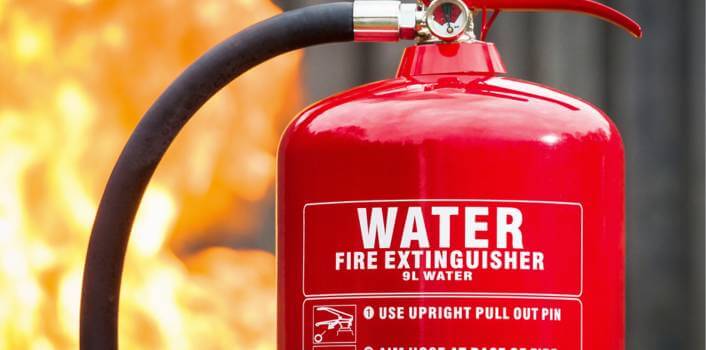
Water fire extinguishers are one of the most common types of fire extinguishers. They’re mainly used on Class A fires involving solid combustible materials such as paper, wood, cardboard, textiles, and some plastics.
Water extinguishers work by cooling the burning material and reducing the temperature below the point at which the fire can continue to burn.
They’re often found in areas such as:
- Offices – where paper, packaging, and furniture are present
- Schools – where books, paper, and textiles are stored
- Shops and retail units – where stock, paper, and display materials are found
- Warehouses – where cardboard, pallets, and packaging are present
It’s important to remember that water extinguishers aren’t suitable for flammable liquids, cooking oils, or live electrical equipment. Using water on the wrong type of fire can encourage the fire to spread or create an electric shock risk.
Foam fire extinguishers
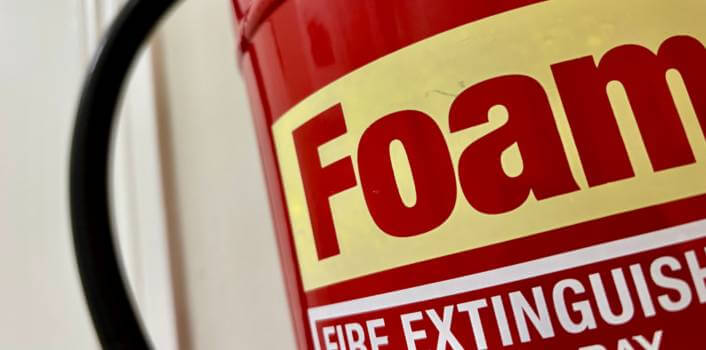
Foam fire extinguishers are suitable for Class A and Class B fires. This means they can be used on solid combustible materials such as paper and wood, as well as flammable liquids such as petrol, paint, and solvents.
Foam extinguishers work by forming a blanket over the surface of the burning material. This helps to smother the fire and prevent vapours from reigniting. Because of this, foam extinguishers are often used in premises where both general materials and flammable liquids may be present.
They’re commonly found in:
- Workshops – that have paints, solvents, and materials stored
- Retail premises – where packaging, displays, and cleaning fluids are
- Warehouses – that store combustibles and certain liquids
- Offices – where paper, furniture, and some mixed risks are present
Foam extinguishers shouldn’t be used on cooking oil fires or flammable gas fires. They’re also not the first choice for live electrical equipment unless the extinguisher has been specifically tested and marked as suitable.
CO2 fire extinguishers
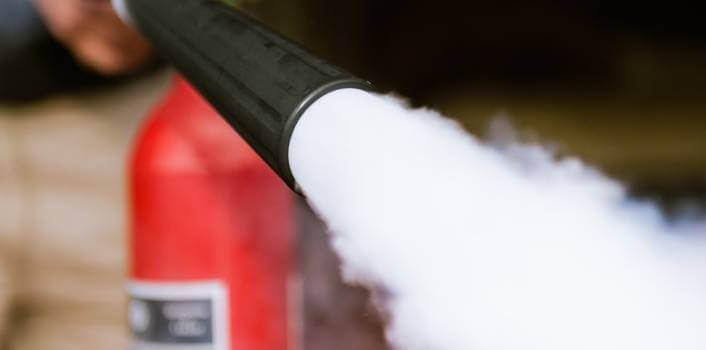
CO2 fire extinguishers are commonly used for fires involving live electrical equipment. They’re also suitable for some Class B fires involving flammable liquids.
CO2 stands for carbon dioxide and these extinguishers work by displacing oxygen around the fire, helping to smother the flames. Because CO2 doesn’t leave residue, it’s often used in areas with electrical equipment, computers, servers, and sensitive machinery.
CO2 extinguishers are commonly found in:
- Offices – due to electrical equipment, such as computers and printers, being used in the area
- Server rooms
- Electrical cupboards
- Retail premises – where equipment like tills, screens, and other electrical devices are present
CO2 extinguishers aren’t suitable for deep seated Class A fires because they don’t cool the material effectively. They’re also not suitable for cooking oil fires.
In many premises, CO2 extinguishers are paired with water or foam extinguishers to provide wider fire coverage.
Dry powder fire extinguishers
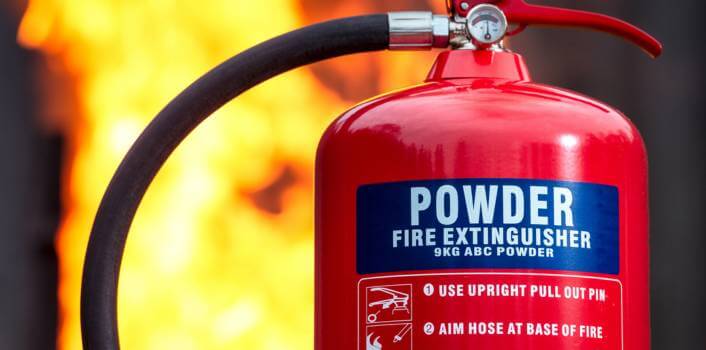
Dry powder extinguishers are versatile and can be used on Class A, Class B, and Class C fires. This means they can tackle solid materials, flammable liquids, and flammable gases.
They work by releasing a fine powder that interrupts the chemical reaction of the fire. This can make them effective in mixed risk environments, particularly where flammable gases or outdoor risks are present.
Dry powder extinguishers may be found in:
- Workshops – with mixed materials, fuels, and tools
- Garages – that have fuels, vehicles, and machinery
- Industrial sites – with liquids, gases, and mixed risks
- Outdoor areas – that have vehicle or plant related risks
However, it’s important to note that dry powder extinguishers aren’t always suitable for enclosed indoor environments. The powder can reduce visibility, affect breathing, and create residue that may damage equipment or require extensive clean up. For this reason, dry powder should be specified carefully and only where it’s appropriate for the risks present.
Wet chemical fire extinguishers
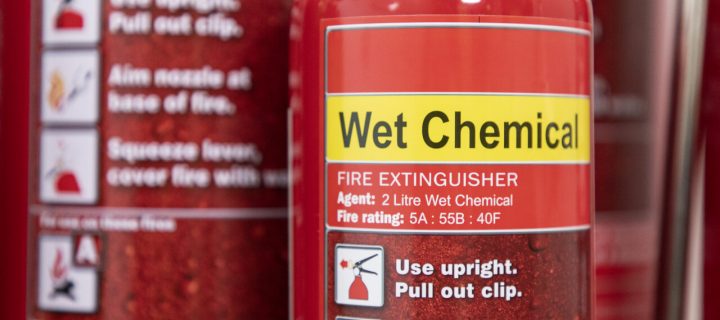
Wet chemical extinguishers are designed for Class F fires involving cooking oils and fats. They’re commonly used in commercial kitchens, restaurants, cafes, canteens, food production areas, and hospitality venues.
Cooking oil fires burn at extremely high temperatures and can reignite if not treated correctly. Wet chemical extinguishers work by cooling the oil and creating a layer over the surface to help prevent reignition.
Wet chemical extinguishers can help tackle fires that involve:
- Deep fat fryers
- Hot cooking oils
- Frying equipment
- Food preparation areas
- Cooking appliances
- Catering equipment
Water, foam, or CO2 extinguishers shouldn’t be used on cooking oil fires. Using the wrong extinguisher can cause the burning oil to spread or make the fire worse.
Can one fire extinguisher cover every fire risk?
The short answer to this is, no. While some extinguishers can be used on more than one fire class, each type has limitations.
For example, dry powder extinguishers are versatile but may not be suitable for enclosed indoor areas. CO2 extinguishers are useful for electrical equipment but don’t cool solid materials effectively. Wet chemical extinguishers are essential for cooking oil fires but aren’t designed for general electrical risks.
This is why extinguisher selection should be based on a fire risk assessment. The right solution may involve a combination of different types of fire extinguishers across different parts of the building.
How to choose the right fire extinguisher for your premises
Choosing the right fire extinguisher for your building depends on a number of factors including:
- Building use – different types of buildings all present different types of fire risks
- Materials present – paper, wood, oils, gases, liquids, and metals all require different types of fire extinguishers
- Electrical equipment – areas with live electrical equipment may need a certain extinguisher type, such as CO2
- Occupancy – busy or public facing premises may need clearer positioning and fire signage
- Fire risk assessment – this should be the foundation for the type, number, and location of your fire extinguishers
- Maintenance requirements – all fire extinguishers installed must be maintained regularly to keep them in safe working order
At Asco, we can help businesses select, install, and maintain the correct fire extinguishers for their premises. Our team can assess your building, review your fire risk assessment, and recommend suitable extinguisher types, quantities, and locations. We also provide ongoing fire extinguisher servicing and maintenance to help ensure your equipment remains compliant, accessible, and ready for use.
Speak to us for your fire extinguisher needs
Understanding the different types of fire extinguishers and their uses is essential for keeping your premises safe, compliant, and properly protected. From water and foam extinguishers, to CO2, dry powder, and wet chemical extinguishers, the right choice depends on your building, fire risks, and day to day operations.
If you’re unsure which fire extinguishers your premises needs, we can help. Our team supports businesses across Scotland and the wider UK with fire extinguisher installation, maintenance, replacement, and surveys. We can assess your requirements, recommend the most suitable types of fire extinguishers for your building, and ensure your equipment is correctly positioned, clearly identified, and properly maintained.
Don’t hesitate to get in touch with us today to discuss your fire extinguisher needs in more detail or to arrange expert support for your premises.
Fire extinguisher types FAQs
- What do fire extinguisher colours mean?
- Fire extinguisher colours help identify the type of extinguisher. Water extinguishers have a red label, foam has a cream label, CO2 has a black label, dry powder has a blue label, and wet chemical has a yellow label. This helps users quickly recognise the correct extinguisher in an emergency.
- Which fire extinguisher is best for electrical equipment?
- CO2 extinguishers are commonly used for fires involving live electrical equipment because they don’t leave residue and are suitable for electrical risks. However, the right provision depends on the wider fire risks in the area, so a professional assessment is recommended.
- Which fire extinguisher is used for cooking oil fires?
- Wet chemical extinguishers are used for cooking oil and fat fires. They’re designed for Class F fires and are commonly found in commercial kitchens, restaurants, canteens, and food production areas.
- Can you use a water extinguisher on electrical fires?
- No, water extinguishers shouldn’t be used on fires involving live electrical equipment. Water conducts electricity and can create a risk of electric shock. CO2 extinguishers are commonly used for electrical risks, but the correct extinguisher should always be selected based on your fire risk assessment.
- What type of fire extinguisher does my business need?
- The type of fire extinguisher your business needs will depend on the risks within your premises. A small office, commercial kitchen, workshop, warehouse, or healthcare setting may all need different extinguisher types. At Asco, we can assess your premises and advise on suitable fire extinguishers, installation, and ongoing maintenance.